GPT 6.2 Sol vs Astra: 4x Cheaper, $10,800 Off on One Row
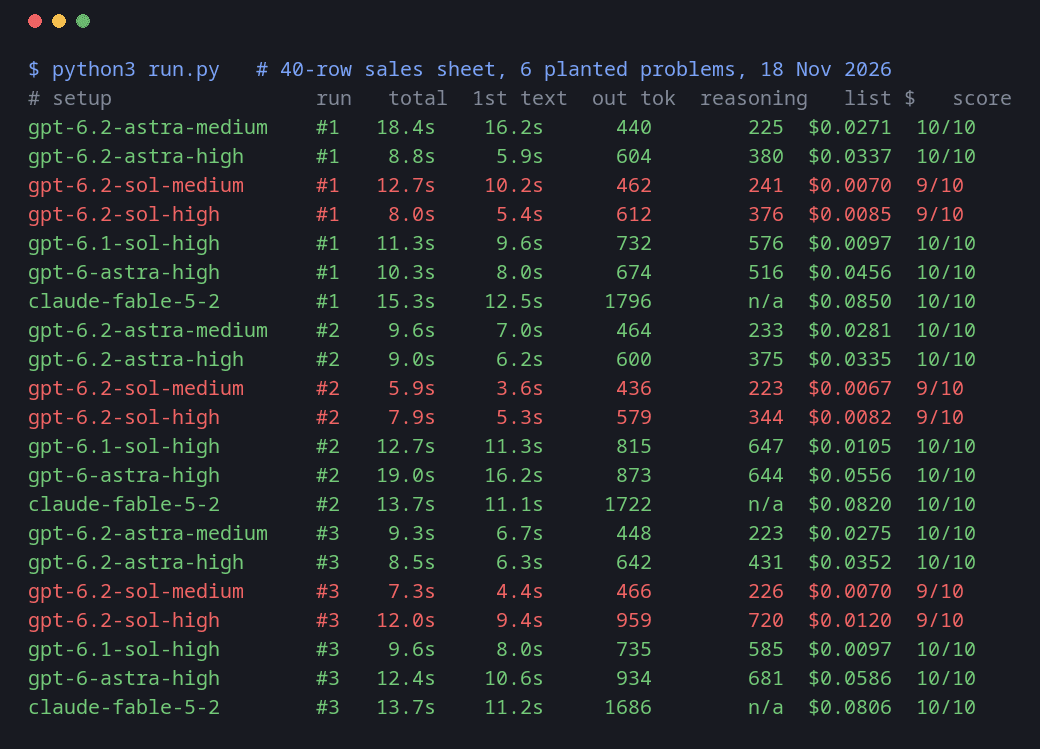
We gave GPT-6.2 Sol and GPT-6.2 Astra the same 40-row sales sheet, three runs per setting, the day after launch. Astra scored 10/10 every time. Sol cost about a quarter as much but dropped the same row in all six runs, against the prompt's rule.
By Duy Lam Le, written with AI9 min read
Why trust this: every result, number and screenshot comes from a real run on our own accounts, not from the AI. How we test
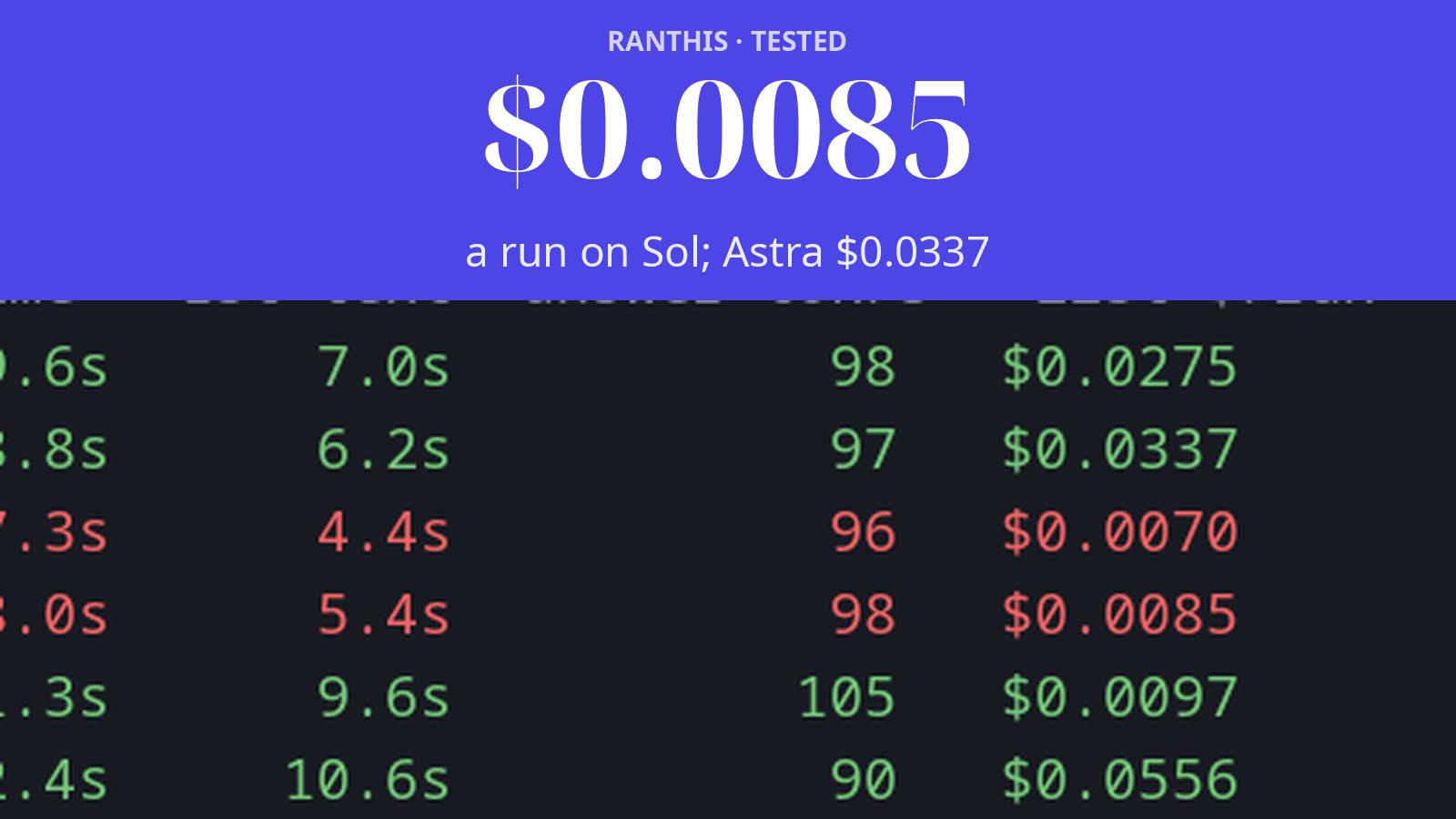
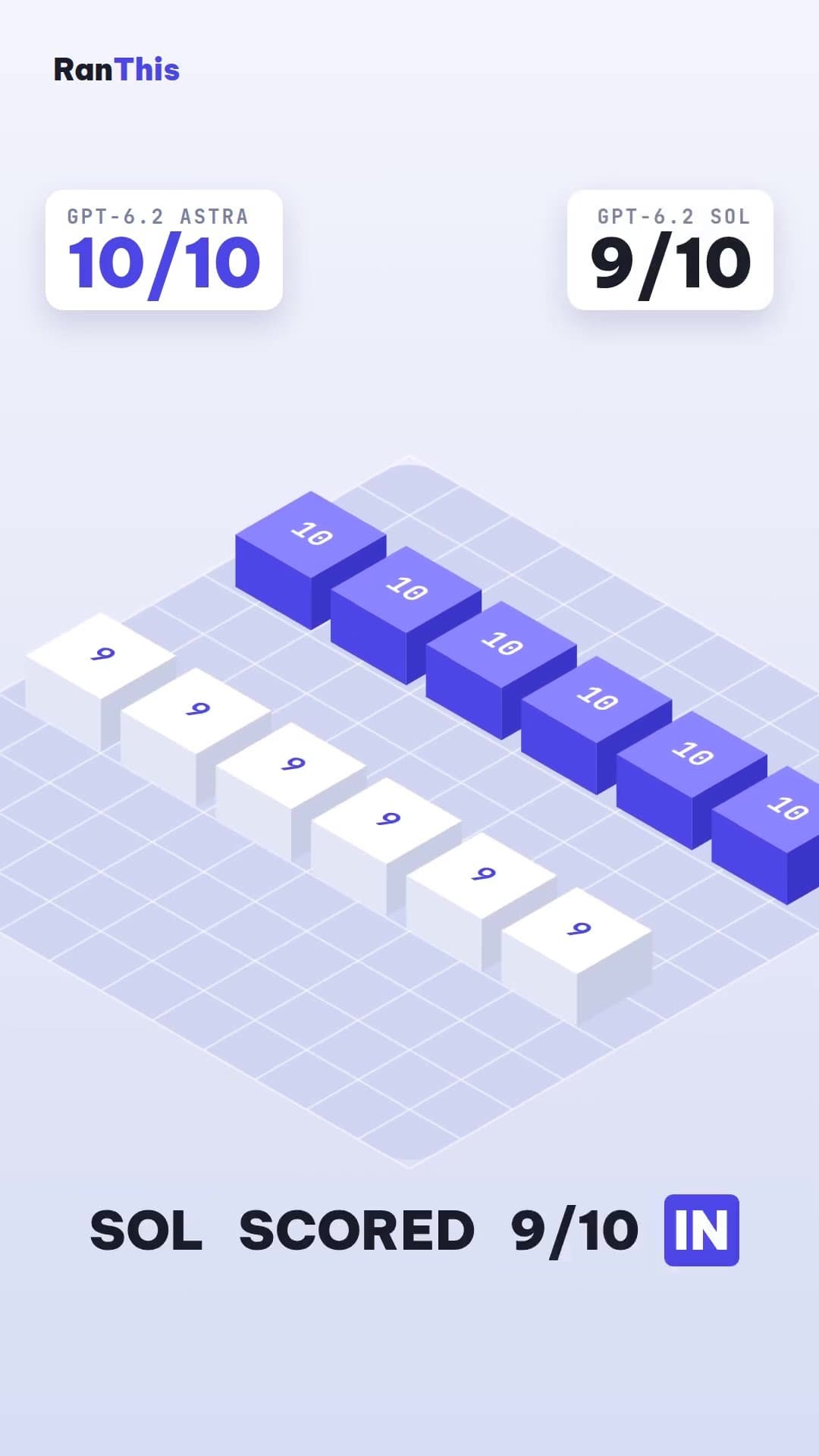
GPT 6.2 Sol costs a quarter of GPT-6.2 Astra per token and got our messy 40-row sales sheet right except for one row. Astra 6.2 scored 10/10 in six runs. Sol 6.2 scored 9/10 in six, each time dropping the same row on its own judgment, $10,800 off one branch total. Per run, Sol cost $0.0085 against $0.0337.
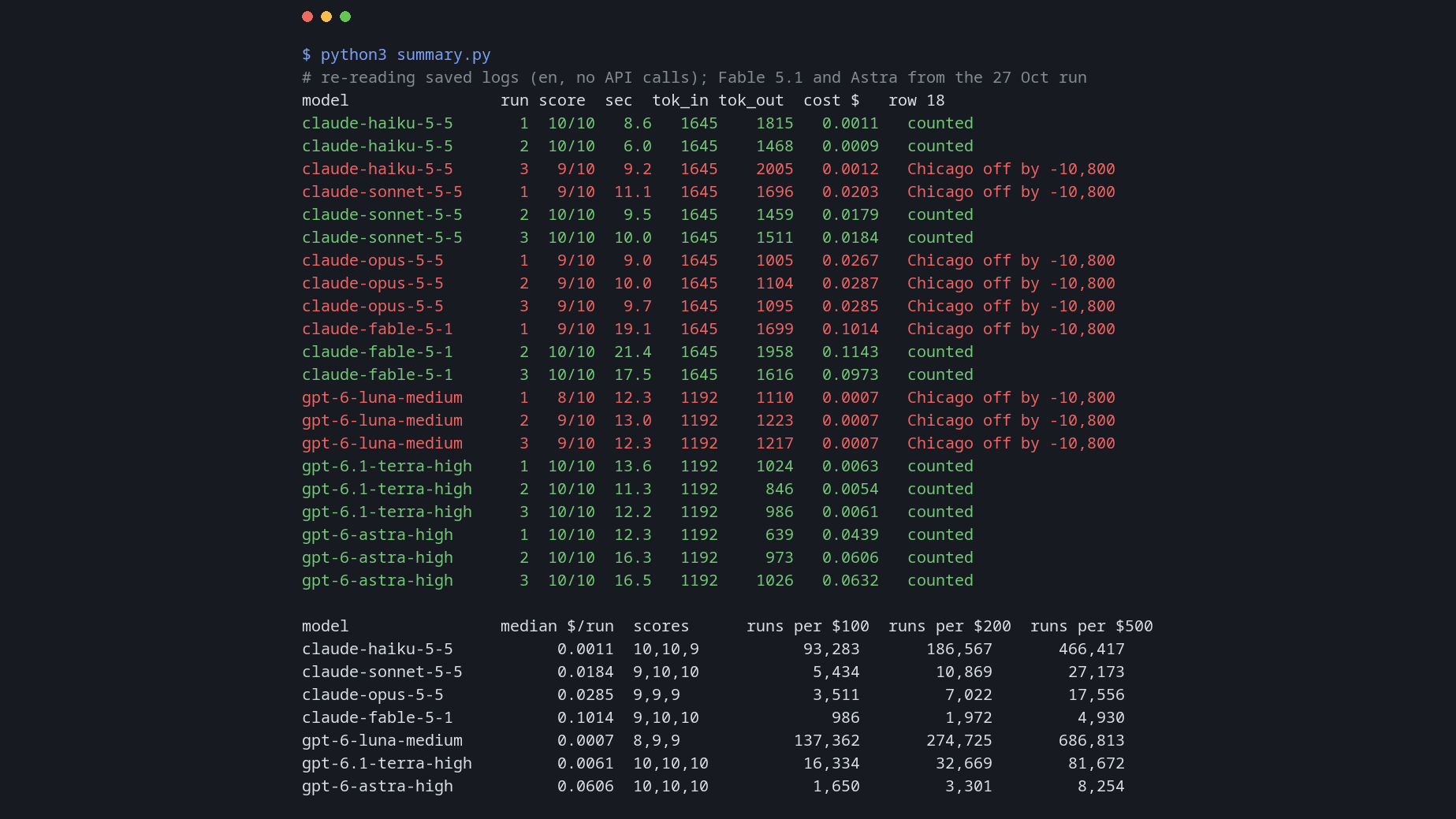
OpenAI released both models on 17 November, with Sol at $2/$10 per million tokens and Astra at $8/$40. On 18 November we ran them through the OpenAI API from a Python script, three runs per setting, on the same sheet we used for GPT-6.1 Terra in October (Claude Fable 5.2 ran through the Anthropic API for comparison). The sheet, the answer key and the scoring code are the ones we committed on 27 October, unchanged, so today's numbers sit next to the older ones. The raw answers are kept with this article's source files.
At a glance
Key results
- GPT-6.2 Astra: 10/10 in all 6 runs (effort medium and high), median 8.8 s and $0.0337 per run on high at list price.
- GPT-6.2 Sol: 9/10 in all 6 runs at $0.0070–$0.0085 per run, about 4 times cheaper than Astra 6.2, and the fastest to start answering (4.4 s on medium).
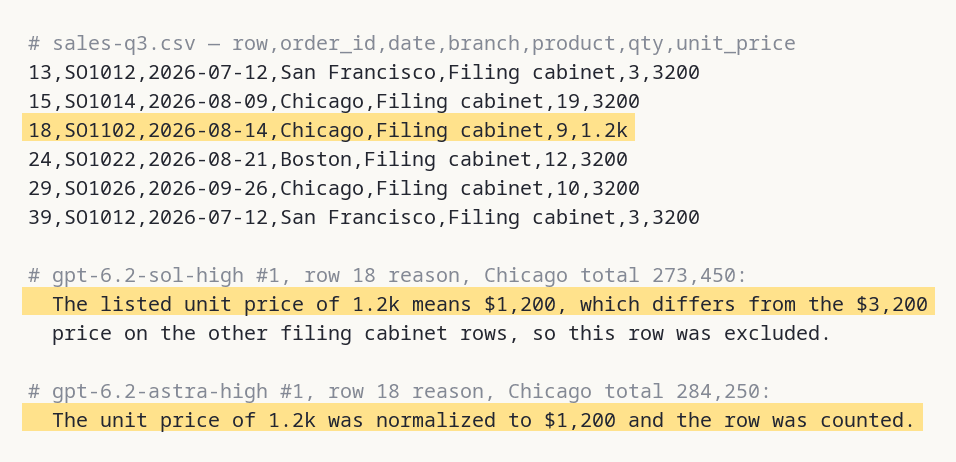
- Sol's lost point was a judgment call, repeated in every run: it excluded a row priced "1.2k" because $1,200 did not match the $3,200 on the other filing cabinet rows. The prompt said to normalize shorthand and count it. Every other model counted it.
- The previous Sol (GPT-6.1 Sol) scored 10/10 three times on the same sheet, for $0.0097 per run.
- Astra 6.2 beat GPT-6 Astra on cost and time: $0.0337 vs $0.0556 per run, 8.8 s vs 12.4 s, same score.
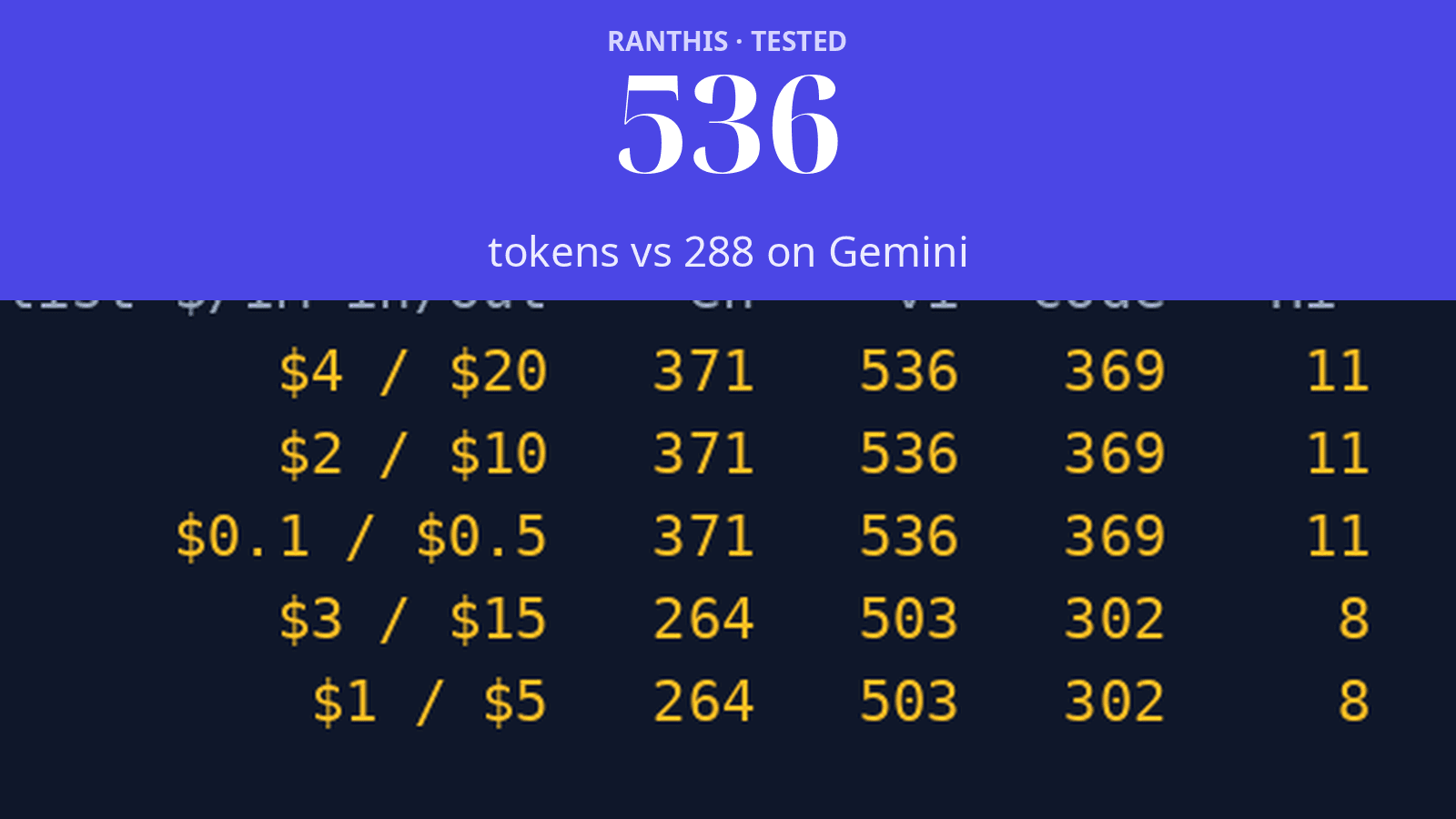
- Claims we checked from X: we did not see Astra 6.2 at "21x cheaper, 4x faster" than Claude Fable 5.2. On this task it was 2.4 times cheaper and 1.6 times faster. Another post reported Sol at 72 tokens a second against 200 for the previous Sol; through the API we measured about 98 against 105.
Hands-on test
Setup
- Task: a CSV of 40 invented Q3 sales rows for an office furniture company with branches in Boston, Chicago and San Francisco, prices in US dollars. Every model got the same prompt: total revenue per branch, the top branch, and every abnormal row by number, returned as JSON.
- Rules in the prompt: exclude rows that look like bad data; normalize rows that are only written differently (an abbreviation, another name for the same branch or price) and count them; count duplicates once.
- Planted problems (6): a duplicated order (rows 13 and 39), the date 2026-09-31, a unit price written "1.2k", the branch written "SF", and a quantity of −2.
- Scoring (code, not AI): 1 point per branch total correct to the dollar, 1 for the top branch, 1 per planted problem found, minus 1 for each clean row flagged. Maximum 10.
- Models and settings:
gpt-6.2-astraandgpt-6.2-solat reasoning effort medium (OpenAI's suggested starting point for GPT-6.2) and high;gpt-6.1-solandgpt-6-astraat high;claude-fable-5-2at its API default. Three runs each, taken in turn so the time of day hit every model the same. 21 runs in total. - Timing: streaming on. "Total" is request sent to last token. "First text" is when the first word of the answer arrived, after the model finished thinking. Answer speed is answer tokens divided by the seconds the answer took to stream.
- Cost: tokens × list price read on the vendor pages on the run day. The table uses full list price; OpenAI's automatic cache discount cut some repeat runs by up to about a third, and the 21 runs together were billed $0.61.
GPT-6.2 Astra vs Sol: the results
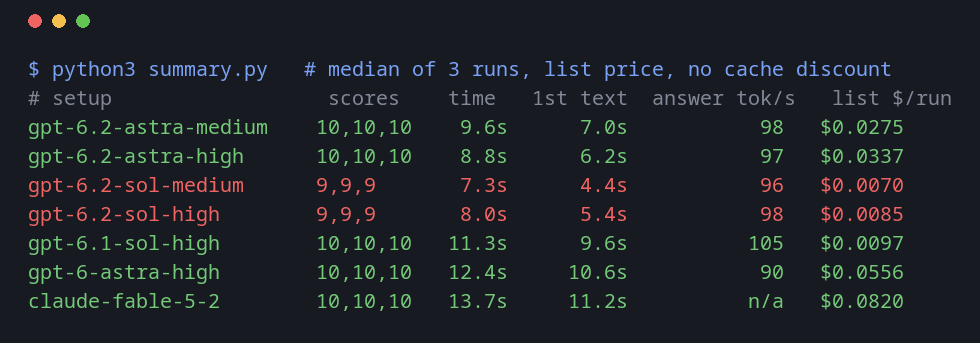
Medium vs high made little difference on either GPT-6.2 model. Both used a median of about 225 reasoning tokens on medium and 375 on high, and total times on the two settings were within a second of each other. On Sol, high did not fix the lost point.
Why Sol 6.2 lost the same point every time
Row 18 is a Chicago order for nine filing cabinets with the unit price written "1.2k". The other five filing cabinet rows are priced $3,200. Our prompt treats "1.2k" as shorthand: normalize it to $1,200 and count the row. That is what the answer key does.
Sol 6.2 read the price correctly and then dropped the row anyway. In all six runs it wrote a note like this one: "The listed unit price of 1.2k means $1,200, which differs from the $3,200 price on the other filing cabinet rows, so this row was excluded." Its Chicago total came out at $273,450 instead of $284,250. Astra 6.2 counted the row in all six runs. Claude Fable 5.2 noticed the same price gap and said so, then counted the row as the rule asked.
You can argue Sol has a point: a filing cabinet at a third of the usual price is worth a question. But the prompt gave a rule for shorthand prices, and Sol put its own judgment above it. What matters for anyone using it on real data is that the behavior was steady. Six runs out of six, on two effort levels, Sol did the same thing. In October, GPT-6.1 Terra on its default setting flipped on this row from run to run. Sol 6.2 did not flip; it decided.
GPT 6.2 Sol vs 6.1 Sol
The older Sol (GPT-6.1 Sol) counted row 18 and scored 10/10 three times. Sol 6.2 was faster in total (8.0 s vs 11.3 s on high) because it thought less: 376 reasoning tokens against 585. Its answer streamed slightly slower, about 98 tokens a second against 105. Both list at $2/$10 per million tokens, so the cost difference ($0.0085 vs $0.0097) comes only from the shorter thinking.
GPT-6.2 Astra vs GPT-6 Astra
Astra 6.2 lists at $8/$40 per million tokens, down from $10/$50 for GPT-6 Astra. On this sheet it also used fewer tokens (604 vs 873 output on high), so the cost per run fell 39%, from $0.0556 to $0.0337. It was faster in total too, 8.8 s against 12.4 s. Same score.
GPT-6.2 Astra vs Claude Fable 5.2
Fable 5.2 and Astra 6.2 have the same list price, $8/$40 per million tokens. Astra 6.2 still cost 2.4 times less per run here ($0.0337 vs $0.0820) because it wrote 604 output tokens to Fable's 1,722, thinking included, and the same prompt counted as 1,192 input tokens on OpenAI and 1,645 on Anthropic. With OpenAI's cache discount on repeat runs, the billed gap was about 3 times. Astra 6.2 finished in 8.8 s against 13.7 s. Both scored 10/10 three times. A claim on X put Astra at about 21 times cheaper and 4 times faster than Fable 5.2; on one short structured task, we measured 2.4 to 3 times cheaper and 1.6 times faster.
GPT-6.2 pricing
Prices from OpenAI's model pages, read 18 Nov 2026. Requests over 272K input tokens cost more on all four. Output includes reasoning tokens, which is why the same model can cost more per task on a higher effort setting.
GPT-6.2 Sol release date and price
OpenAI's API changelog lists GPT-6.2 Astra and GPT-6.2 Sol under 17 November 2026. Both are in the Responses API and Chat Completions; tool calling needs the Responses API. Both reject reasoning effort "none"; OpenAI's migration guide says to use "low" if you used "none" or "minimal" before. Sol 6.2 keeps the GPT-6.1 Sol price.
What worked
What worked
- JSON output parsed on all 21 runs; no retries for format.
- Every setup found all six planted problems in every run and flagged no clean rows. Every lost point came from the same cell.
- Reusing the sealed October task let us compare models across a month: same bytes in, same scoring code.
Where it fell short
What didn't work
- One short task cannot rank models in general. OpenAI positions Sol 6.2 for coding and agents at scale; we did not test coding, tools or long context.
- Answer speed is measured on short answers (about 150 to 250 answer tokens), so it is rough. The X posts may have measured inside Codex or ChatGPT, which we did not test. Anthropic does not report thinking tokens separately, so we could not split Fable's answer speed out.
- We did not test Codex, so we have no number for the claim that Astra 6.2 runs slower than GPT-6 Astra inside Codex. Through the API, on this task, it was faster.
Our verdict
Use GPT-6.2 Astra when the rules have to be followed exactly, as in totals that go into a report. It scored 10/10 every time, and it is now cheaper and faster than GPT-6 Astra. Use GPT-6.2 Sol when cost and speed matter more and you can write down every edge case: at about a quarter of Astra's cost it got everything else right, but it overrode a rule we gave it in six runs out of six. If you move from GPT-6.1 Sol to 6.2 Sol for this kind of work, test your own edge cases first; on our sheet the older Sol was the more literal one. If you only need cheap and literal, GPT-6.1 Terra on high scored 10/10 on this sheet in October at $0.0062 a run (see our GPT-6.1 Terra spreadsheet test). For prices across vendors, see our AI model pricing and rate limits comparison.
This test is also written up in Vietnamese: GPT 6.2 Sol và Astra.
FAQ
Is GPT-6.2 Sol as good as Astra?
Not on our sales sheet. Astra 6.2 scored 10/10 in six runs; Sol 6.2 scored 9/10 in six, always dropping the same row that the prompt said to count. On everything else they matched.
How much does GPT-6.2 Sol cost compared with Astra?
About 4 times less per run on our task: $0.0085 vs $0.0337 on high effort at list price. The per-token price is a quarter of Astra's, and both used similar token counts.
Is GPT-6.2 faster than GPT-6.1?
In total time, yes on our task: Sol 6.2 took 8.0 s against 11.3 s for GPT-6.1 Sol, because it thought less. Its answer streamed slightly slower, about 98 vs 105 tokens a second.
How this was made: an AI (Claude) wrote the test script, ran the 21 API calls and wrote this page. Every number comes from the saved raw results; prices and dates were checked against the OpenAI and Anthropic pages linked in the sources.
Sources
- OpenAI API changelog - Nov 17 2026: GPT-6.2 Astra and GPT-6.2 Sol in the Responses API and Chat Completions (read 18 Nov 2026)
Vendor document
- OpenAI API docs - GPT-6.2 Sol: $2/$10 per 1M tokens, cached input $0.10, reasoning effort none rejected (read 18 Nov 2026)
Vendor document
- OpenAI API docs - GPT-6.2 Astra: $8/$40 per 1M tokens, cached input $0.40 (read 18 Nov 2026)
Vendor document
- OpenAI API docs - Using GPT-6.2: start with reasoning effort medium for a new integration (read 18 Nov 2026)
Vendor document
- OpenAI API docs - GPT-6.1 Sol: $2/$10 per 1M tokens (read 18 Nov 2026)
Vendor document
- OpenAI API docs - GPT-6 Astra: $10/$50 per 1M tokens (read 18 Nov 2026)
Vendor document
- Claude Docs - Pricing: Claude Fable 5.2 $8/$40 per 1M tokens (read 18 Nov 2026)
Vendor page